

Category Archives

2072 Articles

Posted by sarmavangala on

Junior Business Analyst


Junior Business Analyst

Integrity*integrity* Integrity*integrity* Integrity*integrity*


Representative tasks

Analysis

  • Documents client organisation’s direction, structure, business processes and requirements.
  • Researches client organisation’s industry and competitive position.
  • Assists in the collection and consolidation of required information and data.


Execution

  • Understands project plans and is able to clearly articulate roles, project goals, and timelines.
  • Takes input from supervisor and is able to appropriately apply comments/feedback.
  • Adheres to project standards defined by project management.
  • Proactively carries out project support /administrative functions.
  • Establishes responsible deadlines and personal work plans and manages time effectively.


Core competencies

Communication

  • Listens to others and accepts input from team members.
  • Clearly articulate ideas and thoughts verbally.
  • Accurately prepares written business correspondence that is coherent, grammatically correct, effective and professional.

Technical Understanding

  • Proficient in Microsoft Office suite.

Problem Solving

  • Proposes solutions to problems and considers timeliness, effectiveness, and practicality in addressing client needs.
  • Generates innovative solutions by approaching problems with curiosity and an open mind, using existing information to its fullest potential.


Professional qualities

Leadership

  • Displays a positive attitude.
  • Demonstrates flexibility in day-to-day work.
  • Sets high standards of performance for oneself.

Teamwork

  • Establishes harmonious working relationships with team members.
  • Appreciates each team member’s contributions and values each individual member.

Client Management

  • Values internal and external clients and responds to their needs as they arise.
  • Establishes effective working relationship with clients.
  • Follows established communication guidelines.
  • Uses good judgement in what and how to communicate with clients.


Organisational responsibilities

Innovator Development

  • Understands the professional development process and becomes actively involved by setting challenging goals and meeting them through continuous learning.
  • Seeks input from mentors and supervisors.
  • Actively applies feedback received to day-to-day work and strives to improve performance.

Internal Operations

  • Accurately completes and submits time and expense reports in a timely manner
  • Accurately completes and submits status reports in a timely manner
  • Complies with all our policies and procedures


Academics

A 4-year degree from an accredited school in engineering or business is required.

Personal

Must be available for unfettered global travel, sometimes for extended periods.

If ADA is applicable, please self-identify.

Toronto, Dallas or Singapore will be the base office.

Residency status must allow the candidate to be able to live and work in the country where the base office is located.

Must be fluent in written and spoken English.


Must have a high degree of proficiency in both:

Arabic and Mandarin


Integrity*integrity* Integrity*integrity* Integrity*integrity* Integrity*integrity* Integrity*integrity* Integrity*integrity* Integrity*integrity* Integrity*integrity* Integrity*integrity* Integrity*integrity* Integrity*integrity* Integrity*integrity*
Integrity*integrity* Integrity*integrity* Integrity*integrity* Integrity*integrity* Integrity*integrity* Integrity*integrity*




Integrity*integrity* Integrity*integrity* Integrity*integrity* Integrity*integrity* Integrity*integrity* Integrity*integrity*



Integrity*integrity* Integrity*integrity* Integrity*integrity* Integrity*integrity* Integrity*integrity* Integrity*integrity*

Integrity*integrity* Integrity*integrity* Integrity*integrity* Integrity*integrity* Integrity*integrity* Integrity*integrity* Integrity*integrity* Integrity*integrity* Integrity*integrity* Integrity*integrity* Integrity*integrity* Integrity*integrity*

Integrity*integrity* Integrity*integrity* Integrity*integrity* Integrity*integrity* Integrity*integrity* Integrity*integrity*

Integrity*integrity* Integrity*integrity* Integrity*integrity* Integrity*integrity* Integrity*integrity* Integrity*integrity*

Integrity*integrity* Integrity*integrity* Integrity*integrity* Integrity*integrity* Integrity*integrity* Integrity*integrity*

Send your resume and a hand-written covering letter to [email protected]*integrity*integ

Integrity*integrity* Integrity*integrity* Integrity*integrity* Integrity*integrity* Integrity*integrity* Integrity*integrity* Integrity*integrity* Integrity*integrity* Integrity*integrity* Integrity*integrity* Integrity*integrity* Integrity*integrity*

Integrity*integrity* Integrity*integrity* Integrity*integrity* Integrity*integrity* Integrity*integrity* Integrity*integrity*

Integrity*integrity* Integrity*integrity* Integrity*integrity* Integrity*integrity* Integrity*integrity* Integrity*integrity*

Integrity*integrity* Integrity*integrity* Integrity*integrity* Integrity*integrity* Integrity*integrity* Integrity*integrity*

Integrity*integrity* Integrity*integrity* Integrity*integrity* Integrity*integrity* Integrity*integrity* Integrity*integrity* Integrity*integrity* Integrity*integrity* Integrity*integrity* Integrity*integrity* Integrity*integrity* Integrity*integrity*

Integrity*integrity* Integrity*integrity* Integrity*integrity* Integrity*integrity* Integrity*integrity* Integrity*integrity*

Integrity*integrity* Integrity*integrity* Integrity*integrity* Integrity*integrity* Integrity*integrity* Integrity*integrity*

Integrity*integrity* Integrity*integrity* Integrity*integrity* Integrity*integrity* Integrity*integrity* Integrity*integrity*

Integrity*integrity* Integrity*integrity* Integrity*integrity* Integrity*integrity* Integrity*integrity* Integrity*integrity* Integrity*integrity* Integrity*integrity* Integrity*integrity* Integrity*integrity* Integrity*integrity* Integrity*integrity*

Integrity*integrity* Integrity*integrity* Integrity*integrity* Integrity*integrity* Integrity*integrity* Integrity*integrity*

Integrity*integrity* Integrity*integrity* Integrity*integrity* Integrity*integrity* Integrity*integrity* Integrity*integrity*

Integrity*integrity* Integrity*integrity* Integrity*integrity* Integrity*integrity* Integrity*integrity* Integrity*integrity*

Integrity*integrity* Integrity*integrity* Integrity*integrity* Integrity*integrity* Integrity*integrity* Integrity*integrity* Integrity*integrity* Integrity*integrity* Integrity*integrity* Integrity*integrity* Integrity*integrity* Integrity*integrity*

Integrity*integrity* Integrity*integrity* Integrity*integrity* Integrity*integrity* Integrity*integrity* Integrity*integrity*

Integrity*integrity* Integrity*integrity* Integrity*integrity* Integrity*integrity* Integrity*integrity* Integrity*integrity*

Posted by sarmavangala on

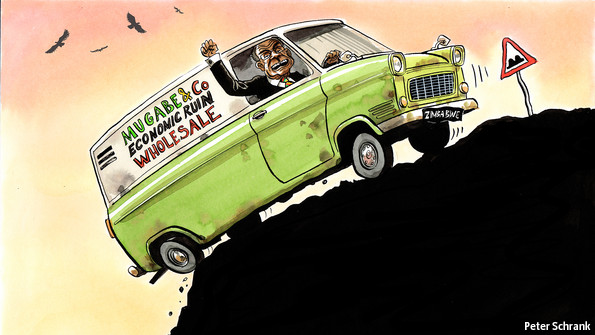
10 Steps for National Destruction – Mugabe’s Step 1: Kill the goose that lays the golden egg


Teacher, economics genius and kleptocrat Mugabe

Economic ruin thanks to the kleptocrat Mugabe

Kleptocracy and tyranny are nothing new but Robert Mugabe has been practicing these for almost 4 decades on a scale that is impressive.  He has received numerous honorary degrees and has even been Knighted {subsequently withdrawn}.  This 10 part treatment of his tactics should throw light on how tyrants achieve their ends.

Mugabe (93 years old), it is reported, checks in to a clinic on an almost monthly basis in Singapore and it is to be hoped that it is from there that the newswires will allow the world to refer to him as the late Robert Mugabe.  His 50 year old wife and former secretary is almost certain of becoming the next president and so the future for the country looks uncertain.

Let us start.

Chapter One: Kill the goose that lays the golden egg

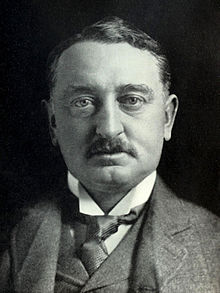
True to form, where colonists entice tribal leaders to sign over vast tracts of fertile land to the pioneers, Sir Cecil Rhodes was able to garner huge land holdings, land which was the envy of all of Africa owing to its fertility.   For his trouble, the country that he founded was, in 1895, named Rhodesia. Rhodes believed that the Anglo-Saxon race was destined to greatness.


Cecil Rhodes, architect of Rhodesia and founder of the Rhodes Scholarship

Cecil Rhodes, architect of Rhodesia and founder of the Rhodes Scholarship


Ian Smith, who considered himself an apostle of Rhodes, was the prime minister of Rhodesia in the 60s and 70s and ensured that the 200 000 whites in his country prospered at the expense of the four million blacks and oft-repeated thatblack majority rule would occur ‘never in a thousand years’. Smith declared UDI (Unilateral Declaration of Independence) from Britain in 1965 promising, ‘A whiter, brighter Rhodesia’, and managed to hold on to power until 1980 when a bloody civil war, which cost almost 50 000 lives, brought Robert Mugabe to power and the country changed its name to Zimbabwe.


Ian Smith and Rhodesia. Picture taken during better times for both.

Ian Smith of Rhodesia.

The economy built and supported by white farmers and businessmen kept the country going for a spell and Mugabe who had called Zimbabwe, ‘The Jewel of Africa’, was able to build roads, 4 airports and a rigorous and inclusive educational system. The whites called him, ‘Good Old Bob’.

Whites started to buy land and invest in the country since they believed in his moderate rhetoric.

Power started to get to him and except for the white minority and a small, yet elite, group around him, there was discontent in the nation and a constitutional amendment that would have increased his power substantially did not go his way in a referendum in the late-90s.. That is when he started to write and execute upon his, ’10 step manual of national destruction’.


Chapter One: Kill the goose that lays the golden egg

He played the race and land card. ‘If white settlers took land from us without paying, we can, in a similar manner, take it from them,’ Mugabe stated. For good measure he added, ‘Don’t trust a white man, even a dead white man’.

A land grab of monumental proportions took place and, obviously, title to the land annexed was conveyed to Mugabe or his cronies.  Armed thugs would arrive at the farms and start building settlements in the middle of lush crops.   White farmers were kidnapped, or butchered or allowed to speed off in their pick-ups with just the clothes they were wearing.

The country known as the breadbasket of Africa became, in a space of a mere decade the basket case of Africa.   Maize (corn) production fell from 2 million tonnes per year to 700 000 in 2014, wheat from 300 000 tonnes to 27 000 and tobacco, a major foreign exchange earner representing almost 40% of f/x earnings dropped from 400 000 tonnes to just 27 000 tonnes. Livestock was used for food rather than husbandry and the few cattle that remain wander around the fields and have foot and mouth disease thus ensuring livestock rearing is an impossibility for the next century. Irrigation piping, farm machinery and everything else needed to run farms has been sold for scrap.

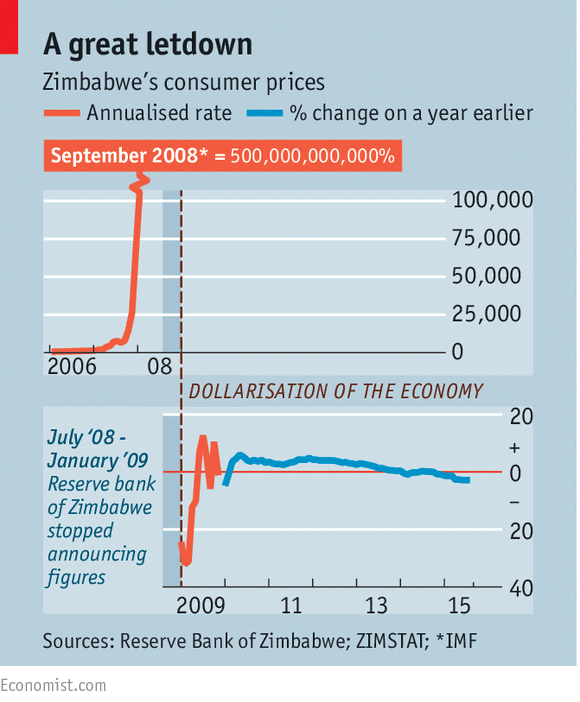
Zimbabwe now depends on food aid from FAO and the World Food Programme and its inflation has been recorded at stratospheric heights such that the salary picked up in the morning was worth only 0.1% of that amount by evening.

Inflation for September was 500 Billion per cent.

Inflation for September was 500 Billion per cent.

The number referring to September 2008’s inflation is 500 Billion %

Tyrants, paranoid about their diminishing support, focus their attention on a resented but economically vibrant and vital ethnic minority in hopes that there will be a marked turnaround in their ratings. Stalin obliterated the wealthy kulak farming class, Idi Amin ‘cleansed’ Uganda of the affluent commercial class represented by Indians and Hitler identified the Jews as the root cause of Germany’s ills and set about his ‘final solution’.

There was a spike in Mugabe’s popularity but the economic damage was extensive and long-lasting and he expended great effort to mask it. How he does it is the second chapter in his manual, ‘Hide the Truth’.

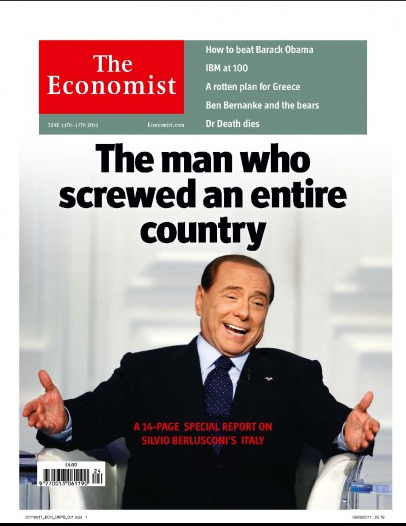
An apt description for Berlusconi

An apt description for Berlusconi

Berlusconi cannot hold a candle to Mugabe.

Posted by sarmavangala on

Remember when you Xeroxed something?

Xerox logo

Xerox logo

A strategic resource is property one owns that is long-standing and one’s competitors cannot duplicate it without incurring serious economic loss.


Xerox had such a strategic resource: its 1950’s patents on plain paper copying were rock solid. Buyers were prepared to pay upwards of USD4 000 for a copier that cost only $600 to manufacture.   Its only competition came from the old wet-process copier companies.


Every five years, the company produced ‘Strategic Plans’ but these were only financial projections. Xerox’s position could be likened to a hydro-electric dam. It takes a great deal of labour to build the dam, but once completed it has a serviceable life for many decades without further significant inputs.


Xerox then created another strategic resource: a world class rapid response repair and maintenance service to keep its breakdown-prone machines in working order. From the patent strategic resource, it created another strategic resource. The value of this is to keep the machines running. From this, the firm created another strategic resource: specially branded Xerox paper that went through the machines without jamming. Essentially it had, therefore, three strategic resources.


Management started to tap themselves on their back ascribing current profits to recent decisions they had taken not giving credit to the planting of seeds many decades back which were now yielding a bountiful harvest.


Books were written about Xerox’s management style, the innovative culture at Xerox which included suggestion boxes, the dress code and their office layouts as all contributing to their success.


Over time, management expended untold resources in trying to get into the computer business while their core skills lay in photocopiers and their maintenance. What they failed to do was to leverage the in-house skilled engineers and technicians on trying to make paper handling better and the machines smaller so that they could sit on a desk top. Canon, Kodak and IBM saw this gap and leapt in to start the enormously profitable line of personal copiers, printers and fax machines.


Management started to loosen their grip on tight integration and started adding many products and projects so as to project youthful vigour through bolt-on acquisitions. They became plump and ready prey for a new generation of upstarts.


Being in possession of a strategic resource makes a company lax and lethargic. In this way Microsoft sidles IBM, Dell outsmarts HP, Nvidia takes business away from Intel. In time, these upstarts also become inertia-bound and there are always nimbler, younger outfits waiting to spring into action.


This is the cycle of life.


So, next time one hears, ‘You’d better tweet that’, one should remember that there was a time when Xerox was also a household name and reconcile oneself to the fact that someone in the future will ask, ‘Remember when you would Google something?’


Posted by sarmavangala on

Hold the High Ground Trumps any other pricing model


Peterbilt Trucks

Peterbilt Trucks through the years.


Hold the High Ground Trumps all Other Pricing Rules


Daimler’s Freightliner and Western Star brands held 40% of the US heavy truck business in 2014, followed by Paccar at 26% with its Peterbilt and Kenworth marques and Navistar and Volvo each come in at 12.5%. This is a low growth, mature and highly competitive industry. Paccar, the subject of this study, has not lost money since 1939 and, not withstanding the economic turmoil of 2008-2009, its return on equity has averaged 16% over the past thirty years.


Fleet Operator’s Viewpoint


Synonymous with quality, Paccar has two brands in its stable: Kenworth and Peterbilt which are widely regarded as the highest quality trucks made in North America and the company does not fail to receive JD Power awards for its trucks as well as for its service. Paccar maintains its high standing despite charging premium prices.


What is Paccar’s secret to being able to sell at a premium? There is none. It is able to show that its trucks run better, run longer and its cost to operate is lower than its competition. This is vitally important to the fleet operator who looks at a fraction of a cent per mile in making procurement decisions.


As an example, a 2015 Kenworth W900L Sleeper lists at around USD165 000 and if it is driven 125 000 miles a year, the operator has to budget around $125 000 every year in operating expenses for fuel, repairs and insurance and all of these expenses are in addition to wages and benefits. It was for this very reason that Kenworth designed low drag, streamlined trucks 4 decades ago, well before its competition.


Quality leadership is a tenuous place


Quality leadership of Paccar’s kind is difficult to hold and there are three reasons for this: one cannot say one has a long-lasting product unless one has a product that has lasted a long time. This reputation take a while to establish but can evaporate in an instant. The second is the complexity in building a very involved, large, high-quality machine. The store-house of knowledge is passed on from engineer to engineer only when the company provides a stable, collegial workplace and thirdly, owing to purchasers’ myopic vision, they tend to be steered by the selling price rather than by future savings.


Custom interior of long-haul truck

Custom interior of long-haul truck

Owner-Driver’s Viewpoint


Paccar addresses the obstacles by its strategy of being the quality leader. It looks at quality not through the eyes of the fleet operator but through the viewpoint of the owner-driver. Owner-drivers increase their pay by driving themselves and their rigs for longer, harder, sometimes driving 16 Hrs a day. They look at efficiency but also have a broader view since their truck is their office, home, lounge and TV room on the road. Also, with the Paccar brand comes a kind of Harley-Davidson aura. The dealers are highly trained and experienced and their configurator tools allow the purchaser to custom design their rigs. Since Paccar builds each truck to order, inventories are low, both of production items and finished goods.


Paccar’s strategy is to do something well and consistently over the long haul.


Paccar’s make to order model means its variable costs are higher. The higher margins endears it to its dealership base which is more dedicated and loyal. Paccar does not make small trucks, only large ones and in the large truck sector it does not make cheap products.


In the design studio, on the shop floor, in the executive suites all the talk and focus is about truckers and the truck industry. They have no need for consultants to come in and tell them where their core competency lies or who their main customer is.


This is Paccar’s strategy. Good strategy is about design and design is about fitting various pieces together so they work harmoniously together.


Posted by sarmavangala on

China’s Judiciary as the Bedfellow of Corruption

Judge China

A senior judge in the Imperial Court

Part II – The Judiciary

In the first part of this set of papers, corruption in China was addressed. A case to counter this blight was made and, in the current paper, the ground is laid on a small, but not insignificant, step that can be taken to at least start the journey to clean up corruption.


Why is it necessary to address corruption? As consultants to industry, our clients, who, in the main, are successful business people, tell us two things that are high on their wish list:


  • I wish to invest in a country where I don’t have to bribe everybody, and
  • I want to invest in a country where the judges are not corrupt, where, if I have a legal case, I can expect justice in the courts.


The connection between corruption and the judiciary is undeniable.


One of the most central facts about China’s judicial system is it is intimately and inexorably intertwined with the party bureaucracy. In another way that is emblematic of the problem discussed is the courts are financed from local government sources rather than from provincial or central funds. It goes without saying, therefore, courts lean towards local pressures.


Judges lack life-long tenure and are hired only with the approval of the courts’ communist party’s political department and are subject to the discipline of the party organization.


Except for the most trivial of cases, judges normally operate in panels of three and there is a two-tier adjudication system. Once received by the filing court, the case is heard before a professional judge sitting with two people’s assessors. The assessors are chosen from a roster of approved laymen so as to give the proceedings a patina of democracy. As to be expected, the assessors take their cues from the judge in charge. A collegiate panel of three professional judges deals with decision-making on appeals to the second instance tribunal.


A case that can be received by the receiving clerk of the court can only be inscribed upon the authority of the local party. Hence, many cases can be refused to be received with no reasons offered. For a business seeking judicial remedies for their economic or social redress this is most frustrating.


A point that was raised above related to local interests. The protection of local interests may be crucial to the business dispute between a local company or individual and those from elsewhere.


In all of this, guanxi, the network of personal relations that judges find more compelling to satisfy than legal norms has to be acknowledged even if not eradicated. Hence, judges are ever heedful of maintaining social stability, i.e., take into account public opinion even if that requires the misapplication of substantive or procedural law.


Guan Xi

GuanXi


In cases involving the author’s clients, during proceedings, blandishments of an influential or aggressive litigant, who threatens to take the matter to ‘people in Beijing’, have scuppered their plans. The presiding judge does not take kindly to having the case heard elsewhere, especially if it is a local individual who chooses to go to Beijing.


The pressures on judges come from many sides:

  • Local government or party officials;
  • Members of the local people’s congress;
  • Members of the local people’s consultative conference {a.k.a. prominent residents};
  • Judges from a higher court and
  • Individual provincial or central party or government leaders.


Hence, the legal framework does not support the independence of the individual judge.


Quoting Sen. Marco Rubio, Chairman of the Congressional Executive Commission on China, ‘Local governments are the most significant source of external interference in judicial decision making’,


A possible two-pronged remedy for this would be to give judges life-long tenure, after a period of probation, and for the judge to have more real-life experience rather than academic achievements prior to being appointed to the bar. In this manner, the judge is more mature and less malleable.


The current system if far too entrenched to make radical changes in a short period of time without substantial resistance. The independence of the individual judge should be paramount and by making that person have tenure should alleviate the dependency of the judge on the local party machinery.

Posted by sarmavangala on

The Necessary Drivers to Make Modi’s Make in India Campaign A Success

Hyderabad2014

Ask anyone on the sidewalks of New York or Auckland to name globally recognized brands from different countries and the following would form a sub-set of their responses:


Japan has Canon, Sony, Honda …..

Taiwan has Acer, HTC …..

South Korea has Hyundai, Samsung, LG ….

India has …………………………………..long pause……scratching of head….. Jaguar/Land Rover {these were acquired brands and so constitutes cheating here}


What India lacks is a clutch of world-beating products. Herein lies the rub. Its Asian neighbours had 60 years of thoughtful leadership which marshaled agriculture, manufacturing and finance policy-makers towards the one goal of collective prosperity. The progression of Japan, for example, from a broken country and one on its knees in 1945 to a formidable economic powerhouse in 2015 was through small-holding agriculture to small-scale manufacturing to a world-leading manufacturer with Nikon, Komatsu and other internationally recognized brands in its stable. This progression was underpinned in its entirety by a finance and manufacturing policy that encouraged exporters and fostered intense internal competition.


Prime Minister Modi launched his Make In India campaign immediately upon taking up office in mid-2014. He recognizes the importance of manufacturing in driving economic prosperity. However, this manufacturing has to be of a particular type to achieve his lofty goal, viz., one that is export oriented.


Over the past six decades since independence from Britain, the various Indian governments gave scant attention to local manufacturers, except if they were run by favoured industrialists, but were quick to prevent imports, for both production and for consumption. In this manner, local competition was stifled and mediocre products were turned out.


QUANGO’s {Quasi-Autonomous non-Governmental Organisations} flourished under these artificial conditions and some were even able to come out with goods of unquestionable excellence. Hindustan Machine Tools (HMT) is a prime example of such an entity.


Walk into any hardware store in India and ask for a screwdriver. The tool handed to you is mediocre, except if it is an import—usually from China—and comes without a warranty. Against this backdrop, Modi intends to make India into a manufacturing titan fully capable of turning out stealth fighter jets and high-speed bullet trains and, that too, during his tenure as PM, say by 2020. This is a laudable objective but the timeline is hardly realistic.


For him to achieve success here, he has to look first towards education. The British, plantation style of education that India has had thrust upon it by its Colonial masters cannot produce the hordes of technocrats necessary to drive his dream. If he looks towards the much vaunted IITs as producers of the calibre of individuals he desires, he’ll be sorely disappointed. Over the past two decades, India has provided the world with IT professionals of exceptional quality. However, only about 3 million of an estimated 500 million in the Indian workforce are in IT. Had the graduates of the IITs and other colleges gone on to industry rather than IT or finance, which has been their wont, there would have been no need to have a Make In India campaign.


Almost 5 decades of policy neglect have created a situation where only 10 per cent of the work force is employed in manufacturing. Contrast this with South Korea where the focus was industry-based development for the past 3 decades and fully 30 per cent of the labour force is drawn into industry. So, secondary and post-secondary education will have to be re-aligned along the German, Italian and Swiss models with industry providing internships. They will become the incubators of the new crop of technocrats.


The next item on his To Do list is to look to the crumbling infrastructure. The roads and railways connecting the various cities and the road systems within the cities themselves have to have a serious expenditure in analysis and then monumental capital outlays have to be planned for upgrading most of these. Electrical capacity building will have to be an imperative. Private-Public partnerships may work in this context.


Finally, he will have to corral bureaucrats charged with land, labour and capital policy to provide the last supporting pieces. Agriculture land will have to be made available for the factories. Buying farmland and converting it to build factories is tremendously complicated and expensive; by law, companies have to pay four times the market price in rural areas The Special Free Zones, where enterprises are given special treatment, also will not suffice.


India continues to provide heavily subsidized power to agriculture and, at the same time, charge prohibitively high rates to manufacturing. China, and other countries hoping to develop, follow the reverse logic. Price baselining and making available a plentiful and regular supply has to be a given here.


The cost of labour in India is lower than in China. With the spectacular growth in China, wages there have moved up considerably. India has a plentiful supply of labour available at attractive rates.


India’s cost of capital is one of the biggest impediments to entrepreneurs. These costs are among the highest in the world and the root cause is the closed financial system in India. So, Modi has much on his plate if he wants this to succeed and all the items are priority number 1.


The realistic estimate to make everything fall into place and to have all the policy parties aligned should, at the very least, take a generation. This is a long time horizon for any politician but Mr Modi has to be credited with at least being able to identify the current malaise in India.


The Make In India initiative is going to have to have a lot of thought expended into it. The results will be immense, if the execution is done right.


Posted by sarmavangala on

China as she should become


Lake and rowboat


First Imperative: Addressing Corruption and Financial Crime

Part I – The genesis of the problem of corruption


Corruption is authority plus monopoly minus transparency.


The scale of bureaucracy in China and the break-neck pace of its economic development from an almost standing start are the two ideal conditions for the growth of corruption and unbelievably massive financial gain by underpaid government officials.


Official corruption: a long-standing pedigree


“The abuse of public power (gonggong quanli) by the occupants of public office (gongzhi renyuan) in the state and party apparatus for private interests,” is how China’s authorities define corruption.


Transparency International scores China at 36 (out of a possible 100) on its corruption index (http://www.transparency.org/country#CHN) where 0 is most corrupt and ranks it 100th out of the 176 countries surveyed.


Corruption (fubai in Chinese, meaning decay and putrefaction) has been a part of life since many millennia.


In the face of rampant corruption, Confucius helped re-establish the ancient traditions of honour, morality and social hierarchy so as to check the empire’s decline in the later centuries of the Zhou dynasty (1045 – 265 BC).


Two millennia later, peasants in Guizhou province launched protests in 1851 amid famines and local government corruption as the Qing dynasty (1644 – 1911) drew to a close.


At that time, cheating in the imperial examinations was elevated to an art form: Confucian texts were sewn into the cuffs, fans had notes inscribed on their hidden side, miniature books were made available so that they could be concealed between the fingers of an open palm. Some examinees hired experienced scholars to sit exams in their stead. Then, of course, the easiest way to pass was to bribe the examiners.


Mao’s Communist Party of China rose to power in 1949 on the anti-corruption campaign against Chiang Kai-shek’s ruling Kuomitang. The communist party’s dominant position and the economic hardships of the population-at-large meant that poorly paid party officials could easily use their position for personal gain.


Official corruption re-emerged as a principal source of frustration in the late ‘80s fuelling the Tian’anmen Square protests of 1989. Despite the stated policy of President Xi to stamp out corruption, and with the exception of convictions of some high-profile individuals on the grounds of sleaze, little has been achieved.


A cursory glance at the passengers alighting from helicopters at the Hualapai Heliport at Grand Canyon shows that 9 out of 10 fee-paying passengers, who have just parted with USD250 per person for a 1 Hr ride down the Grand Canyon, are junior party officials of the Communist Party and their families. Macao casinos still have high rollers fly in to try their luck at the tables, who, when they are done go back to the mainland to their desk jobs in the local party apparatus.


Going hand-in-hand with market reform, corruption has grown over the past 3 decades relying solely on two factors: opportunity, presented to officials in the form of extensive role of government as a regulator, allocator, producer and employer and motivation, such as, ‘confusion over changing values, weakness of moral sanctions, relative impoverishment and a lack of alternative sources for self-enrichment’. Add to this the privatization of state assets has put numerous opportunities for official graft within tempting reach of poorly paid bureaucrats. Coupled with this, central government has devolved the decision-making apparatus to the local level in critical areas such as investment processing and law enforcement. As an example of this in context, our joint venture counsel teams often highlight the hidden costs of doing business which often appear as ‘fees’. Over the years we have had occasion to see birth control fees, public health fees, public security fee, tree planting fee, traffic control fee, fire department fee and so on.


Having set the stage of the level of corruption, the next important thing one has to come to grips with is the strategy to be implemented to reduce corruption and bring transparency to the dealings of the party and the dealings of the ordinary Chinese. If this is brought about, China will become a beacon for the continent.


Part II in this series will address the initial steps that should be taken to bring light to the dark corridors of power.


Posted by sarmavangala on

The Indian Institutes of Technology: A Stillborn Promise

On a visit to India during the week of December 1st I noted that the front pages of the national dailies were agog with the princely starting salaries on offer to graduating students from the elite Indian Institutes of Technology. Facebook appeared to be leading the fray with offers North of USD300 000 p.a.


The Indian Institutes of Technology have an entrance examination where more than a thousand young people vie for every seat. Once accepted, the student has to survive 5 years of gruelling coursework, quizzes, examinations and lab work. The reward for all this expenditure of effort and unexploited talent? Facebook.


This is the tragedy that India is becoming. Youngsters and seasoned bureaucrats hope that India’s much bandied-about IT sector will be a viable alternative to manufacturing-led development. There is no doubt that firms such as Tata Consultancy Services (TCS) can stand up to international competition. However, almost a quarter of a century after the launch of India’s reform agenda in 1991, a mere 3 million of India’s estimated 1.4 billion people work in IT. The technicians, managers and entrepreneurs who graduate from the IITs and turn up at the doors of TCS on their first day of work create far fewer jobs for others than had they opted to manage factories. Three decades of policy neglect have created a situation where only 10 per cent of the work force is employed in manufacturing. Contrast this with South Korea where the focus was industry-based development for the past 2 decades and fully 30 per cent of the labour force is drawn into industry.


There is no glossing of the fact: it is impossible that the IT firms of Bangalore, or the financial services elite in Bombay will catapult India to the ranks of Japan, Korea, Taiwan or China. This is not going to occur in the foreseeable future and this is the rub: punditry that likens India’s economic development to that of the more northerly countries is fatuous.


For a full treatment of Asian development and especially how Japan, Korea and Taiwan differ from Indonesia, Thailand and Malaysia, refer to ‘How Asia Works’ by Joe Studwell, (2013) Profile Books.

Bill Gates seems to have the right idea:

http://www.gatesnotes.com/Books/How-Asia-Works


Posted by sarmavangala on

The To Do List


The story, set in 1890, goes like this.

JP Morgan, Westinghouse, Charles Schwab and Heinz were all contemporaries of Andrew Carnegie who was the richest man in America (and, by extension, the world) and were residents of Pittsburgh. Carnegie was seated very sagely in a corner of a room during a cocktail party for the above-mentioned movers and shakers of Pittsburgh surrounded by an admiring crowd listening to his every word. Frederick Taylor, who was starting to make a name for himself as a business consultant, was introduced to Carnegie who said, “Young man, should you tell me something about management that is worthy of my attention, I will send you a check for ten thousand dollars’” Now, ten thousand dollars was a princely sum but Taylor did not even blink. With everyone’s eyes on him he replied, “Mr Carnegie, my advice to you is to make a list of the ten most important things you can do, and then start doing them beginning with number one.” Carnegie did not even pretend to have registered the suggestion and continued his banter with the assembled crowd.


A week later, a messenger arrived at Taylor’s with a check for ten thousand dollars.


The question is, why would Carnegie see the benefit of making a list, especially when he was a titan of industry.


The benefit is not the list itself but the process of putting it together. Taylor’s advice is, in a nutshell, to think through the intersection of what was important and what was actionable. Carnegie was forced to ruminate on those things that were fundamental purposes to him and to devise ways to advance them.


Being strategic is being less myopic, less shortsighted than others

Posted by sarmavangala on

What leads a company to have a near-death experience?


BusinesWeekAppleCover

Every day there are a number of companies that struggle to pay their bills. The world is speeding past them and they could be oblivious to the peril that they are in. The myopic vision of the company’s leadership can be, in itself, excused but when hundreds of jobs rely on their decisions, that is where a sense of injustice creeps in.

What leads to a company’s demise?

Customers no longer see value in the goods or services on offer, or they feel that their relationship is not flourishing or that it is only a one way street. One thing is certain: the company has stopped innovating, has stopped investing in itself and in its people and is on ‘cruise control’, i.e., it is satisfied with the status quo.

The worst thing that could happen at such a juncture would be for the bank to call in a note.

It is then that the survival instinct kicks in. The Chairman stands back from the day-to-day mayhem and earns his keep. He makes decisions. Many of them should be painful. If they are pleasant, the fruit they will bear may be bitter.

It is at this time that he should call in a third-party, a professional or a professional group, who can assess the current status, determine what has worked and what needs to be fixed and what it will take to stabilize the ship before embarking on the next stage. Too many companies want to grow but not realize that this is not possible in the presence of a haemorrhaging wound.

The number of people who are in leadership position who pick up the telephone and are prepared to be counselled is pitifully few.  In the absence of this courage, near-death experience could deal a mortal blow.